


Apparel Marketing: 10 Strategies & Examples


Read summarized version with
 ChatGPT
'%3e%3cpath%20fill-rule='evenodd'%20clip-rule='evenodd'%20d='M16.4875%200V6.06H18.75V14.6833H16.3042V20L10.44%2014.8383V19.9592H9.53083V14.8325L3.66%2020V14.6125H1.25V5.99H3.65333V0L9.53083%205.41167V0.158333H10.4392V5.56667L16.4875%200ZM10.44%207.53667V13.6358L15.395%2017.9975V12.0333L10.44%207.53667ZM9.52417%207.47L4.56917%2011.9683V17.9975L9.52417%2013.6358V7.47083V7.47ZM16.3042%2013.7867H17.8408V6.9575H11.2167L16.3042%2011.5742V13.7867ZM8.81917%206.88667H2.15833V13.7158H3.65833V11.5692L8.81833%206.88583L8.81917%206.88667ZM4.5625%202.06333V5.98833H8.825L4.5625%202.06333ZM15.5783%202.06333L11.3158%205.98833H15.5783V2.06333Z'%20fill='black'/%3e%3c/g%3e%3cdefs%3e%3cclipPath%20id='clip0_4212_18220'%3e%3crect%20width='20'%20height='20'%20fill='white'/%3e%3c/clipPath%3e%3c/defs%3e%3c/svg%3e) Perplexity
Perplexity'%3e%3cpath%20d='M9.996%2019.992C9.996%2018.6068%209.73182%2017.3074%209.19632%2016.0936C8.68224%2014.8798%207.96824%2013.8159%207.0686%2012.9163C6.16896%2012.0166%205.11224%2011.3098%203.89844%2010.7957C2.68464%2010.2602%201.38516%209.996%200%209.996C1.38516%209.996%202.68464%209.73896%203.89844%209.21774C5.11224%208.68224%206.1761%207.96824%207.0686%207.0686C7.96824%206.16896%208.6751%205.11224%209.19632%203.89844C9.73182%202.68464%209.996%201.38516%209.996%200C9.996%201.38516%2010.253%202.68464%2010.7743%203.89844C11.3098%205.11224%2012.0238%206.1761%2012.9234%207.0686C13.823%207.96824%2014.8798%208.68224%2016.1007%209.21774C17.3145%209.73182%2018.614%209.996%2019.9991%209.996C18.614%209.996%2017.3145%2010.2602%2016.1007%2010.7957C14.8869%2011.3098%2013.823%2012.0166%2012.9234%2012.9163C12.0238%2013.8159%2011.3098%2014.8726%2010.7743%2016.0936C10.2538%2017.327%209.98905%2018.6533%209.996%2019.992Z'%20fill='url(%23paint0_radial_4212_18233)'/%3e%3c/g%3e%3cdefs%3e%3cradialGradient%20id='paint0_radial_4212_18233'%20cx='0'%20cy='0'%20r='1'%20gradientUnits='userSpaceOnUse'%20gradientTransform='translate(-1.13275%205.96185)%20rotate(18.68)%20scale(21.2772%20170.46)'%3e%3cstop%20offset='0.07'%20stop-color='%239168C0'/%3e%3cstop%20offset='0.34'%20stop-color='%235684D1'/%3e%3cstop%20offset='0.67'%20stop-color='%231BA1E3'/%3e%3c/radialGradient%3e%3cclipPath%20id='clip0_4212_18233'%3e%3crect%20width='20'%20height='19.992'%20fill='white'/%3e%3c/clipPath%3e%3c/defs%3e%3c/svg%3e) Gemini
Gemini'%3e%3cpath%20d='M3.92888%2013.2962L7.86008%2011.0903L7.92585%2010.8981L7.86008%2010.7918H7.66782L7.01009%2010.7513L4.76369%2010.6906L2.81581%2010.6097L0.928632%2010.5085L0.453044%2010.4073L0.0078125%209.82039L0.0533475%209.52694L0.453044%209.25879L1.02476%209.30939L2.28962%209.3954L4.18692%209.52694L5.56309%209.60789L7.60204%209.82039H7.92585L7.97138%209.68884L7.86008%209.60789L7.77407%209.52694L5.811%208.19631L3.68603%206.78978L2.57295%205.98027L1.97088%205.57045L1.66731%205.18593L1.53577%204.34607L2.08219%203.74399L2.81581%203.79459L3.00301%203.84518L3.74674%204.4169L5.33541%205.64634L7.40979%207.1743L7.71335%207.42727L7.83478%207.34126L7.84996%207.28055L7.71335%207.05287L6.5851%205.01391L5.38095%202.93954L4.84465%202.07943L4.70298%201.56337C4.65239%201.35087%204.61697%201.17379%204.61697%200.956236L5.23928%200.111308L5.58332%200L6.41307%200.111308L6.76218%200.414875L7.27824%201.59373L8.11305%203.45054L9.40827%205.97521L9.78773%206.72401L9.9901%207.41715L10.066%207.62965H10.1975V7.50822L10.3038%206.08652L10.5011%204.34101L10.6934%202.09461L10.7591%201.46218L11.0728%200.703263L11.6951%200.293448L12.1808%200.526183L12.5805%201.0979L12.5249%201.46724L12.2871%203.01037L11.8216%205.42879L11.5181%207.04781H11.6951L11.8975%206.84543L12.7171%205.75765L14.0933%204.03744L14.7005%203.35441L15.4088%202.60056L15.8641%202.24134H16.7242L17.3567%203.18239L17.0733%204.15381L16.1879%205.277L15.4543%206.22818L14.4019%207.64483L13.7442%208.77814L13.8049%208.86921L13.9618%208.85403L16.3397%208.34809L17.6248%208.11536L19.1578%207.85226L19.851%208.17607L19.9269%208.50493L19.6537%209.17784L18.0144%209.5826L16.0918%209.96711L13.2282%2010.6451L13.1927%2010.6704L13.2332%2010.721L14.5234%2010.8424L15.0749%2010.8728H16.4257L18.9403%2011.06L19.598%2011.4951L19.9926%2012.0263L19.9269%2012.4311L18.915%2012.9471L17.5489%2012.6233L14.3615%2011.8644L13.2686%2011.5912H13.1168V11.6823L14.0275%2012.5727L15.6972%2014.0804L17.7867%2016.0233L17.893%2016.5039L17.6248%2016.8834L17.3415%2016.8429L15.5049%2015.4617L14.7966%2014.8394L13.1927%2013.4885H13.0865V13.6302L13.4558%2014.1715L15.4088%2017.106L15.51%2018.0066L15.3683%2018.3L14.8624%2018.4771L14.3058%2018.3759L13.1624%2016.7721L11.9835%2014.9658L11.0324%2013.3468L10.916%2013.4126L10.3544%2019.4586L10.0913%2019.7673L9.48416%2020L8.97821%2019.6155L8.71006%2018.9932L8.97821%2017.7637L9.30202%2016.1599L9.56511%2014.8849L9.80291%2013.3013L9.94457%2012.7751L9.93445%2012.7397L9.81808%2012.7549L8.62405%2014.3941L6.80771%2016.848L5.37083%2018.386L5.02679%2018.5226L4.42977%2018.214L4.48542%2017.6625L4.81935%2017.1718L6.80771%2014.642L8.0068%2013.0736L8.7809%2012.168L8.77584%2012.0364H8.7303L3.44824%2015.4667L2.50718%2015.5882L2.10242%2015.2087L2.15302%2014.5864L2.34528%2014.384L3.93394%2013.2912L3.92888%2013.2962Z'%20fill='%23D97757'/%3e%3c/g%3e%3cdefs%3e%3cclipPath%20id='clip0_4212_18270'%3e%3crect%20width='20'%20height='20'%20fill='white'/%3e%3c/clipPath%3e%3c/defs%3e%3c/svg%3e) Claude
Claude'%3e%3cpath%20d='M7.77353%2012.0388L14.278%207.23827C14.5972%207.00347%2015.0534%207.09396%2015.205%207.46044C16.0048%209.38782%2015.6469%2011.7045%2014.0559%2013.296C12.4648%2014.8862%2010.2512%2015.2348%208.22684%2014.4407L6.01614%2015.4643C9.18686%2017.631%2013.0375%2017.0949%2015.4431%2014.6885C17.3517%2012.7811%2017.9424%2010.1807%2017.3896%207.83507L17.3941%207.83956C16.5927%204.39408%2017.5906%203.01744%2019.6366%200.202196C19.6839%200.135341%2019.7332%200.0676703%2019.7821%200L17.0908%202.6901V2.68113L7.7719%2012.04M6.43072%2013.2047C4.15521%2011.0323%204.54778%207.66916%206.48861%205.72874C7.92395%204.29299%2010.2773%203.7076%2012.3307%204.56815L14.5369%203.55024C14.1398%203.26326%2013.6303%202.95507%2013.0453%202.73738C10.4045%201.65058%207.24114%202.19113%205.09403%204.3362C3.02927%206.40055%202.37948%209.57493%203.49441%2012.2838C4.32765%2014.3078%202.9616%2015.7407%201.58578%2017.185C1.097%2017.6966%200.609043%2018.2098%200.214844%2018.752L6.42787%2013.2047'%20fill='black'/%3e%3c/g%3e%3cdefs%3e%3cclipPath%20id='clip0_4212_18265'%3e%3crect%20width='20'%20height='18.752'%20fill='white'/%3e%3c/clipPath%3e%3c/defs%3e%3c/svg%3e) Grok
GrokThis post will help you with apparel marketing by giving you 10 practical tips, most of which you can implement even today.
So, if you’d like to get better results with promoting clothing items, accessories, and grow conversions on your fashion brand's store, you’ll get plenty of inspiration here. Examples of apparel marketing used by Shopify clothing stores from the US and France are also included.
Table of contents:
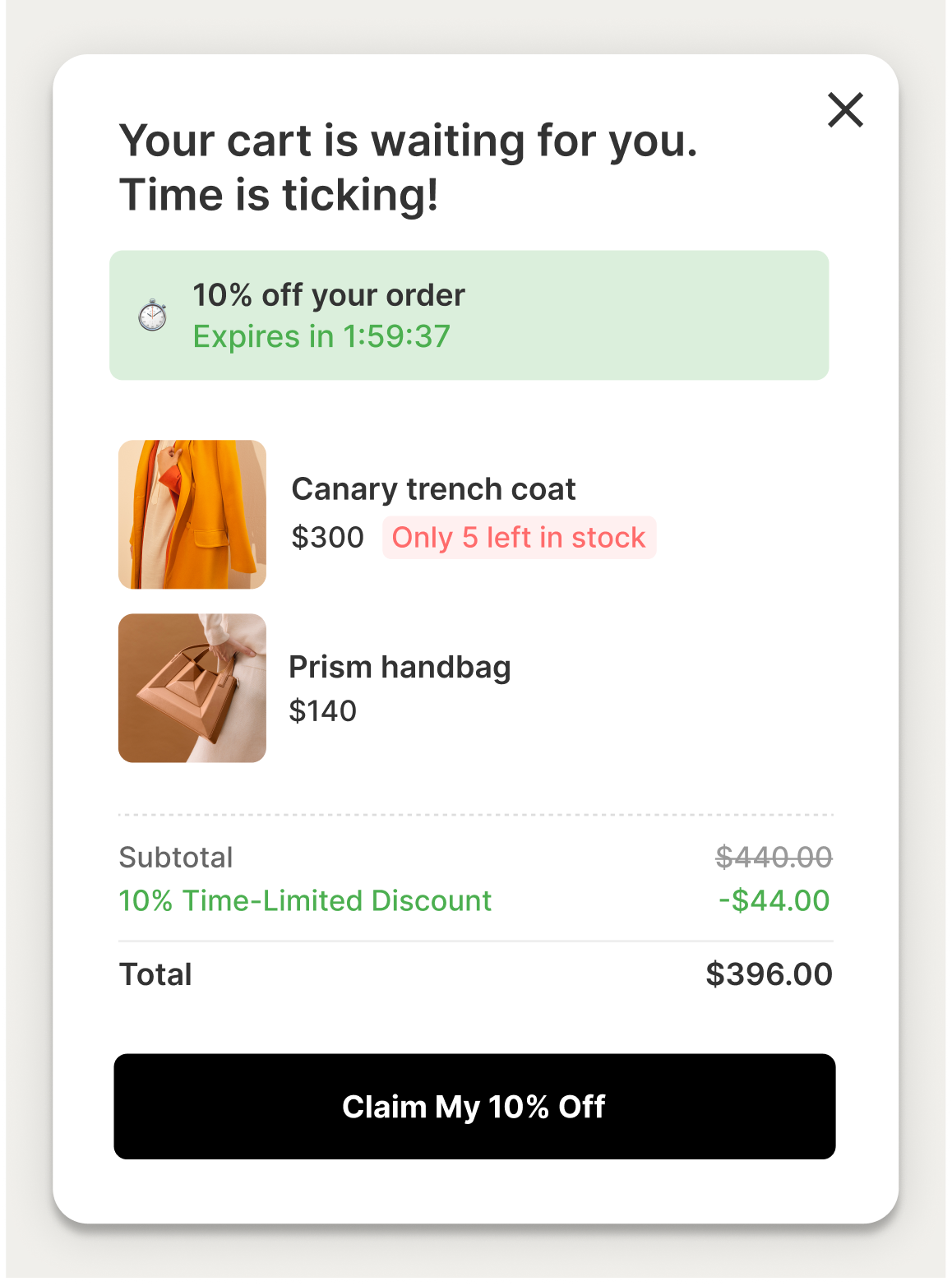
Drive incremental revenue across your apparel store
Use apparel-specific popup templates with AI cart recovery and product recommendations. Integrates seamlessly with Shopify to capture emails and boost sales.

What is apparel marketing?
Apparel marketing is the usage of marketing techniques to promote clothing and accessories to create a strong brand image and increase sales. This branch of marketing includes marketing on websites (onsite marketing), using social media ads, printed magazine ads, runway shows, and television ads, as well as influencer content and promotional emails.
If executed properly, fashion marketing tells the story behind apparel products (could be on the collection and individual item level), the goal and the intent of the designer, and the values and the mission of the brand.
Manage marketing for a luxury fashion brand?
Use this guide to increase website conversions and sales:
Trends shaping apparel marketing
The effectiveness of marketing campaigns as well as profits in the apparel industry with marketing will heavily depend on these four factors:

Data sources: Mckinsey & Business of Fashion
Onsite playbook for fashion stores
This playbook breaks down the highest-performing upsell campaigns we see fashion brands using today. Click them to see how they work.

Shopping Suggestions
Personalized recommendations displayed on your product pages

Countdown Offer
Boost engagement with a countdown popup that creates urgency and excitement

Video Popup
Play a quick 20-sec product video to build trust

Brand Updates
A non-intrusive way of getting the word out to your most valuable customers.

AI Wishlist
Remind visitors about the products they’re most interested in

Shopping Suggestions
Show relevant items right where shoppers are, to grow AOV


See how to build a plan for implementing website personalization with popups to boost conversions and sales
Apparel marketing strategies
These strategies will help you with marketing clothes and accessories on your online store:
1. Announce new items and collections with onsite feed
There’s an efficient way to market new arrivals, highlight specific products, or announce new collections in an elegant way for fashion stores:
Onsite feed.
It’s a small, non-intrusive feed with notifications that you can add to a website's header and share marketing messages.
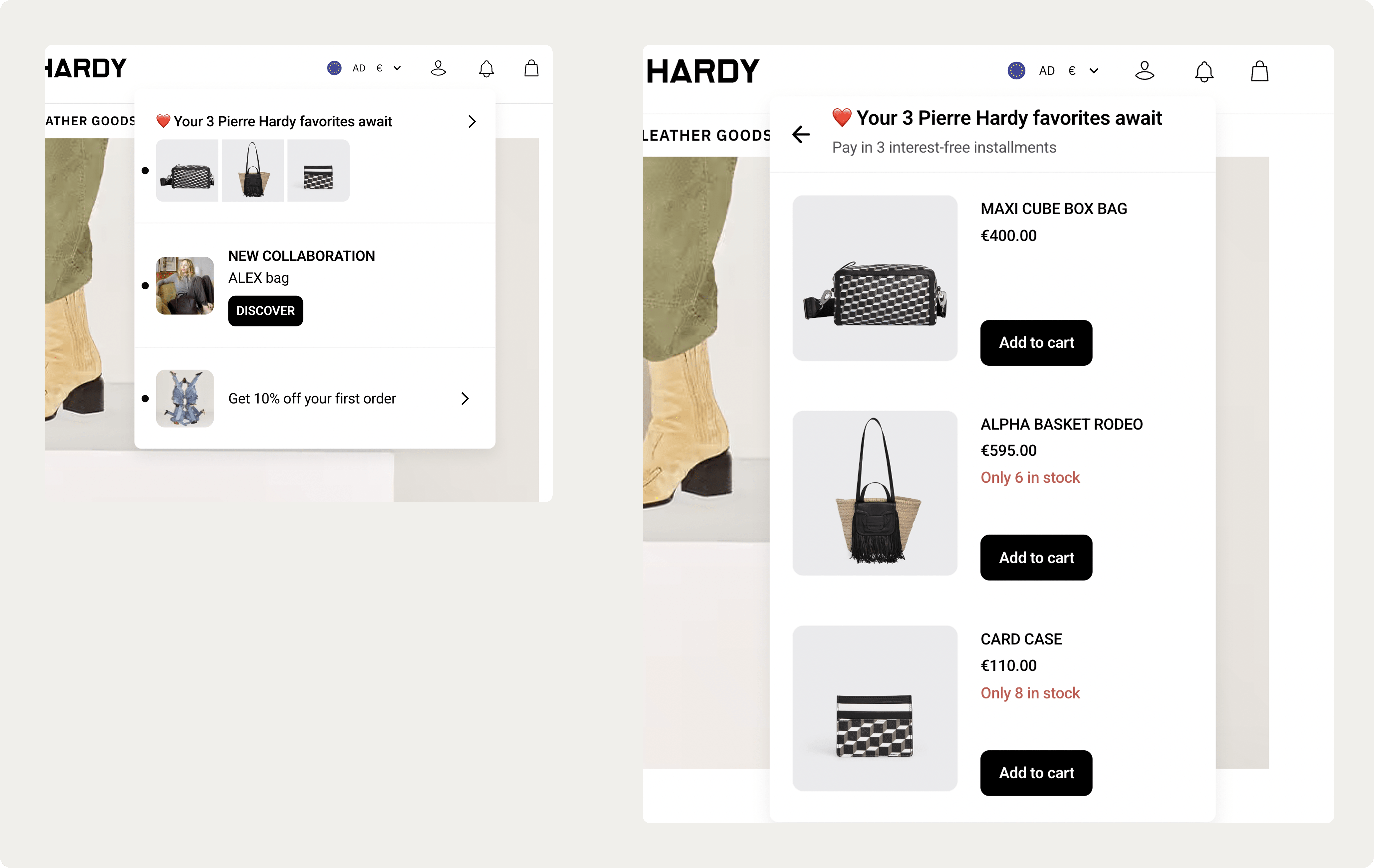
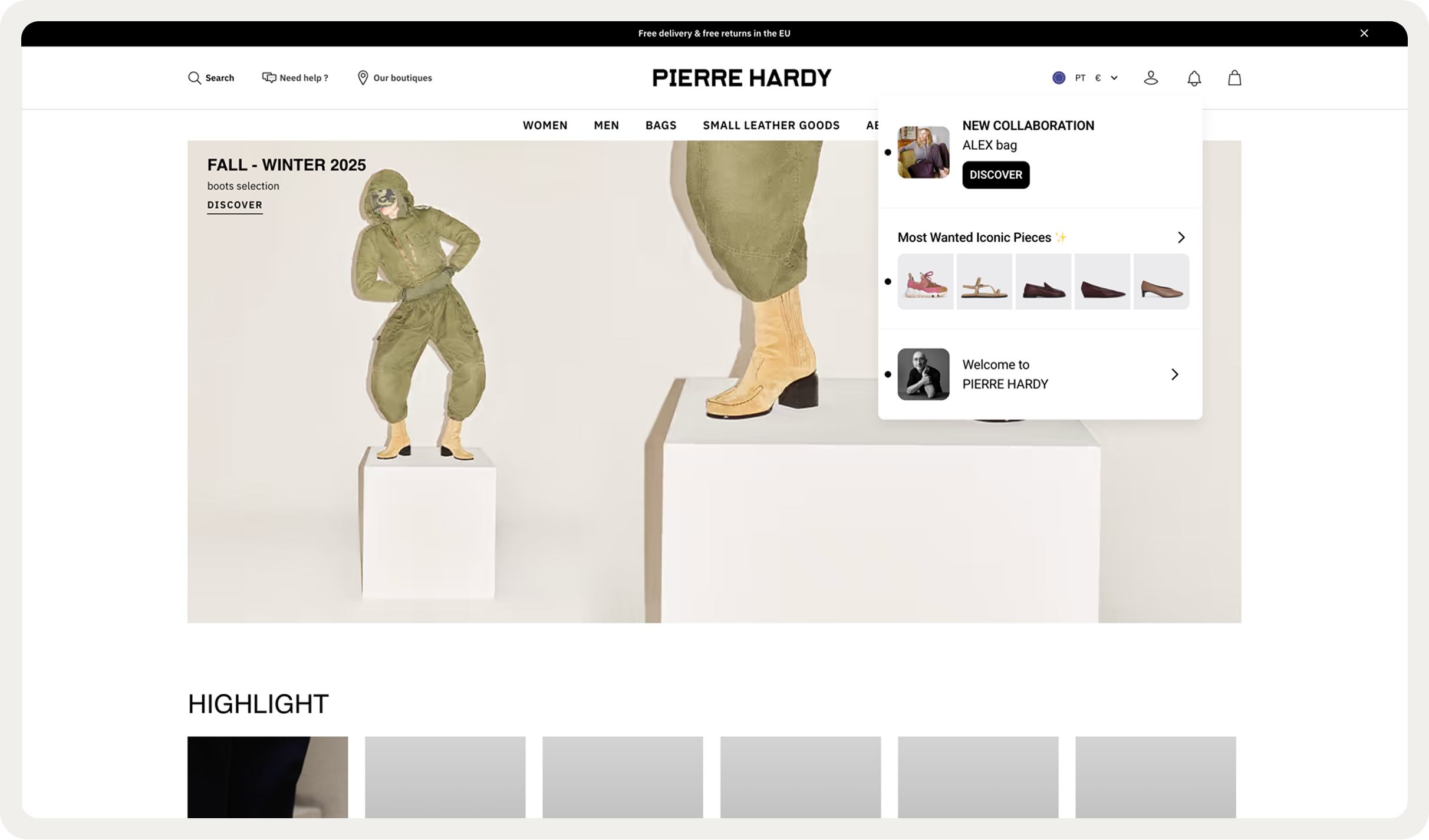
Here’s how Pierre Hardy, one of the most successful French fashion designers, uses the feed to promote new products)—
The desktop:

And mobile:

For Pierre Hardy, keeping the website clean is very important.
But they also need to promote products and collections at the same time.
That’s why adding onsite feed to the header of their store was a perfect way to inform visitors about new offers while not having to sacrifice any homepage space.
You can do that, too (onsite feed works on all websites) and make product announcements much easier and more efficient. They’ll be extremely helpful if you have a lot of new products coming in regularly.
Also, you can market your apparel products with product recommendations in the same feed:
The notification feed offers a subtle, non-intrusive experience that actually outperforms some traditional formats, with an 11.6% CTR.
PIERRE HARDY
Onsite feed has:
native Shopify display rules
goal and revenue tracking
Product recommendations
See stories of apparel brands using onsite feed to promote products and collections:

2. Recommend products based on browsing history
With AI-powered product suggestions, you can deliver personalized shopping experiences that feel natural and helpful. This way, you can make the experience of every visitor at your store feel more relevant.
Here are some examples of how you can use this apparel marketing idea:
Show AI-recommended items based on browsing history to reconnect visitors with styles they showed interest in
Display personalized accessory suggestions on product pages to increase average order value
Present category-specific recommendations to visitors who viewed multiple items in one collection
Create targeted campaigns suggesting complementary products to users who've added items to their cart
Examples:
Sud Express reminds visitors about the items they visited with an interactive notification:

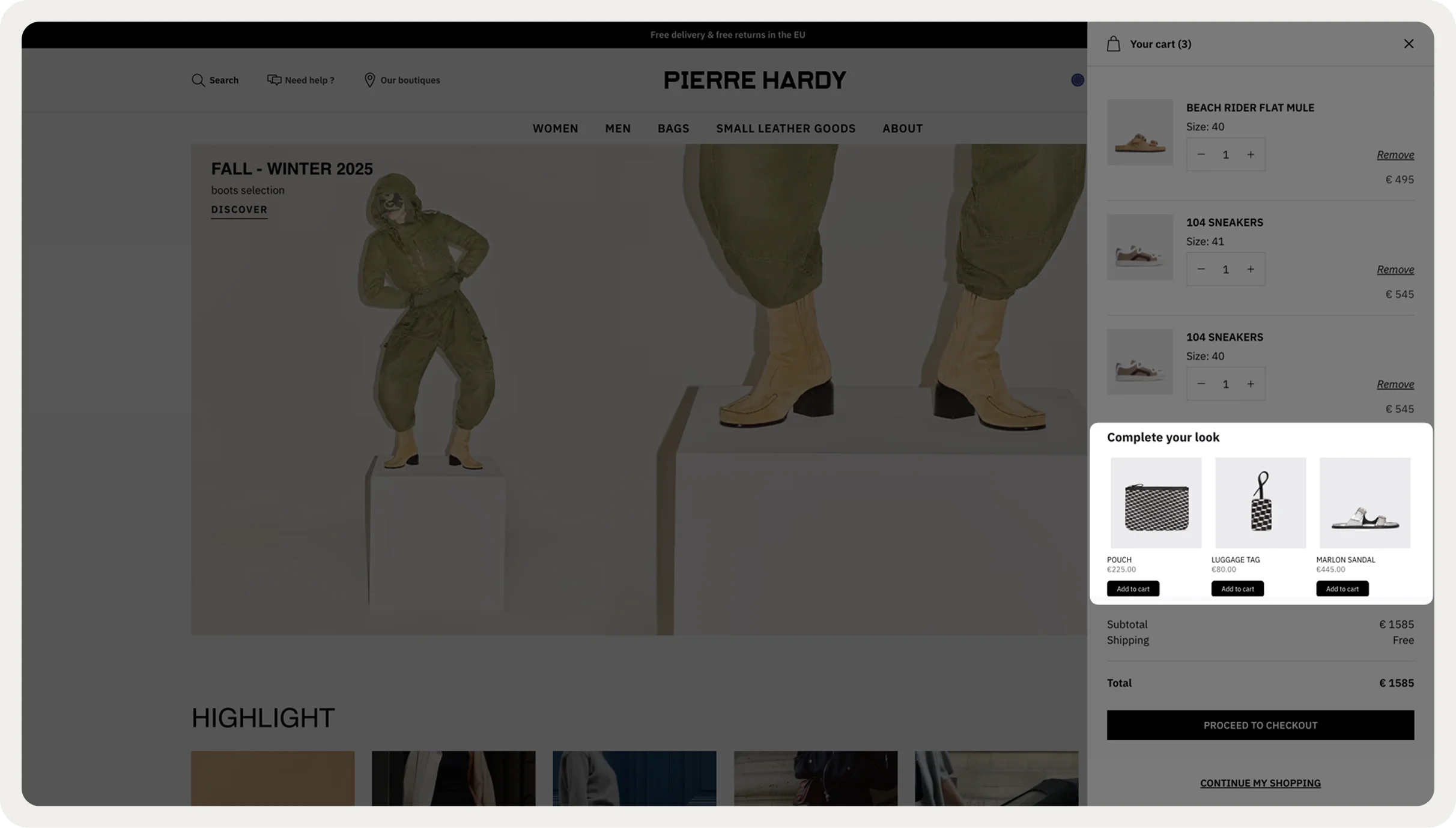
Pierre Hardy shows related products in messages embedded in the cart addition confirmation window.
This helps to improve product discovery and increase average order value:

3. Get more leads with product surveys
Asphalte's business model is pre-order, meaning they manufacture only the products that customers chose and placed orders to get them:
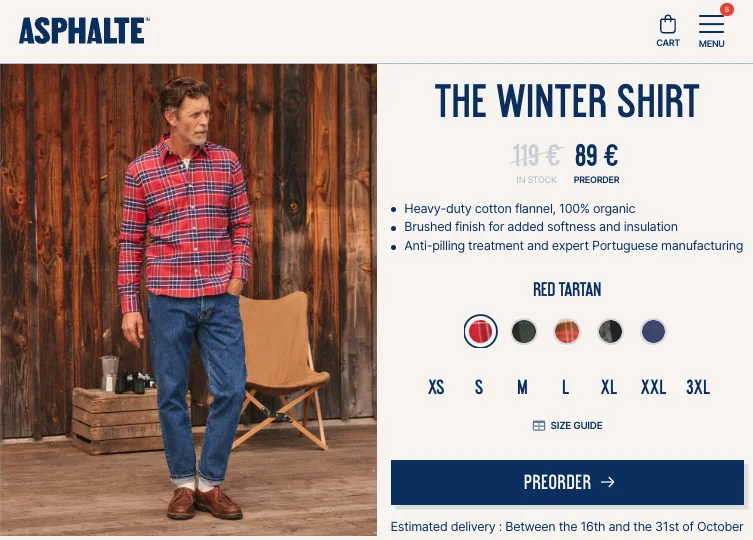
The brand’s founders chose this business model because they wanted to eliminate overproduction, which is something that Asphalte stands for.
While doing some marketing experiments, Asphalte’s head of growth, Ben, found something interesting:
We realized that customer lifetime value was higher after a customer has learned about our mission and how we work.
Head of Growth, Asphalte
So, he made a smart decision to use product surveys—the surveys that Asphalte uses to collect ideas about which products to manufacture—to generate leads.
The visitors would participate in a quick survey and then provide their emails at the end to get updates if their styles were chosen to be made
To drive traffic to the survey page, Ben used full-screen popups like this one:
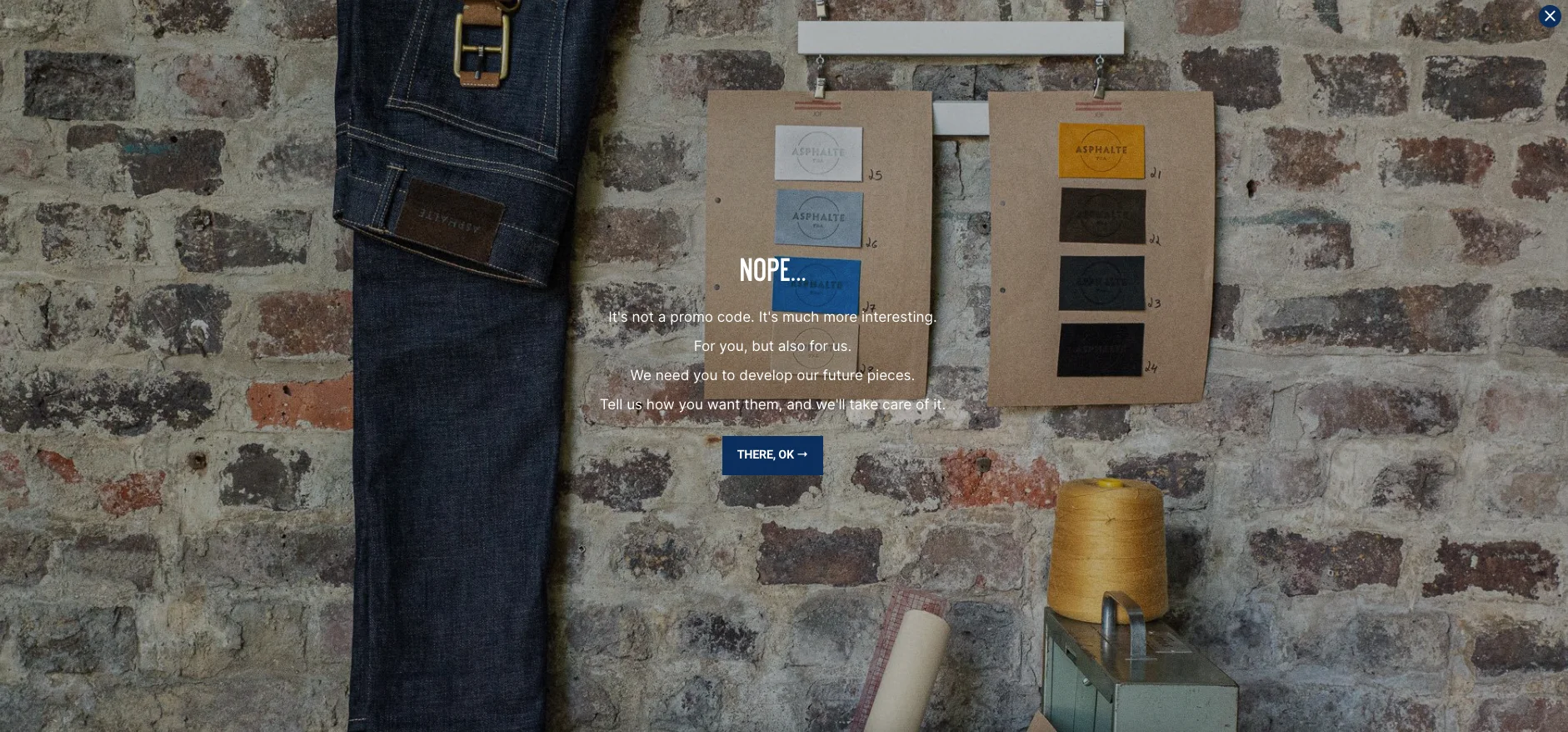
Here's what it says:

The result of this apparel marketing strategy exceeded expectations, as the surveys generated a lot of awareness of Asphalte’s mission and values.
Besides that, the projects consistently brings about 4,000 quality leads on average every month:

We won’t go too deep into this apparel marketing strategy, but you can get all the details in the case study: Asphalte strategy analysis.
4. Show targeted offers based on browsing history
Creating a feeling of personalized shopping experience is not easy… But totally possible for you to try today easily.
The apparel marketing idea is to show marketing messages to visitors based on:
How they found your store (paid ads, Google search, a recommendation from someone, etc.)
What pages they visited (a few products from the same category, for example)
Shopping behavior (adding an item to the shopping cart, for example)
To show these messages, you use the onsite tools you have: website popups, embedded blocks, live chat, etc.).
Let’s see some examples:
TOMS Shoes shows this message to returning visitors (a discount is given to those who left without buying and now returned), note the copy:

Next—
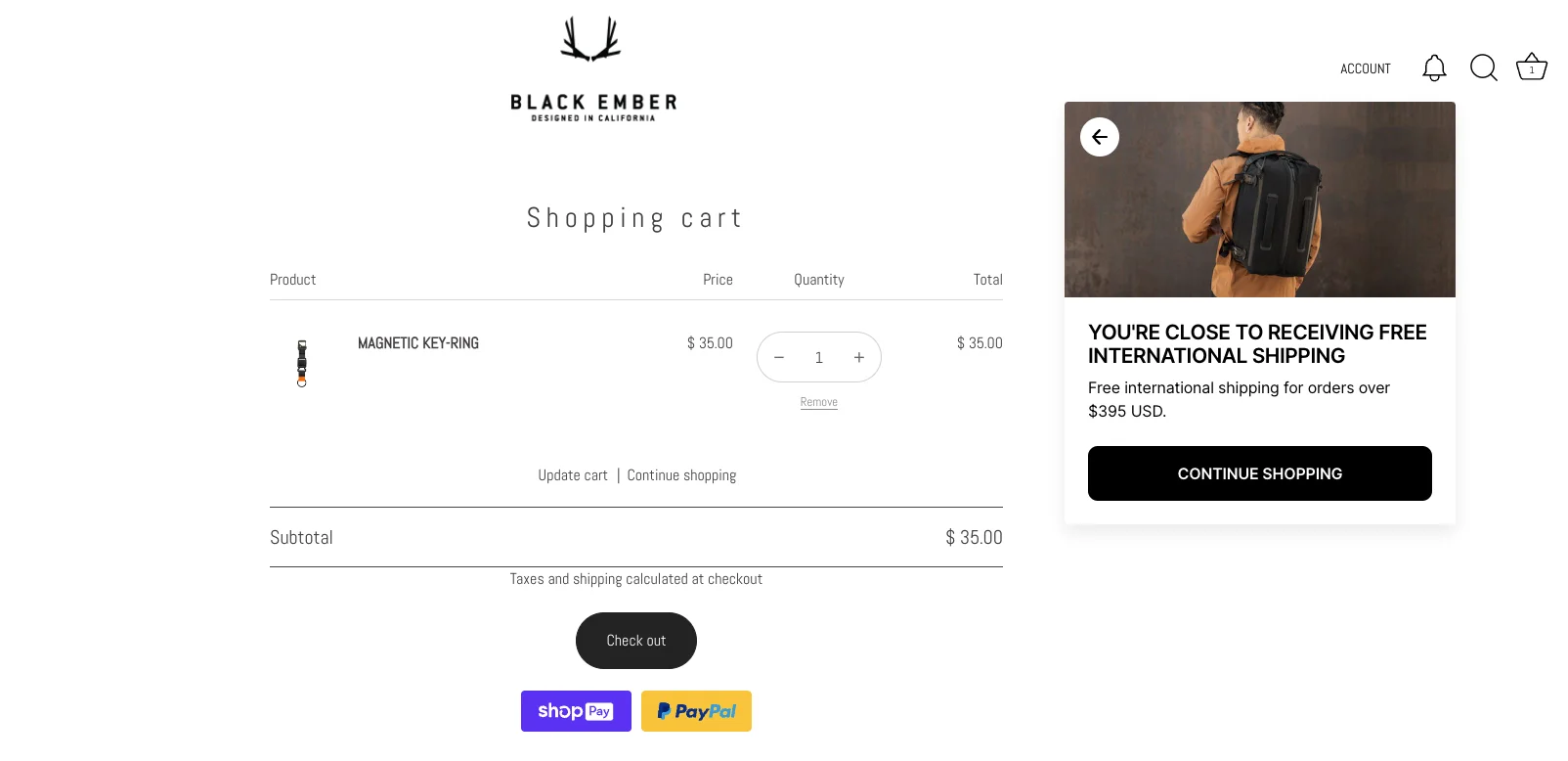
Black Ember shows an onsite notification with a free shipping promo to those who added a product to the cart but have not reached the threshold.
This campaign’s goal is, of course, to increase the average order value (here's the case study if you want to know how this one performs):
This way, you can make the experience of every visitor at your fashion store feel more relevant and positive.
Here are some more examples of how you can use this apparel marketing idea:
Display a free shipping only to visitors from a certain city, area, or country
Show a popup with a discount only for buying dresses to a visitor who viewed two or three products from that category
Show a popup that says that a visitor can get a free item after adding a product to the cart to motivate them to get one more item
Creating such targeted campaigns is actually not complicated at all.
For instance, let’s assume you want to try the second example (with the dresses). Your apparel store has them in a separate category with “dresses” in the URL like that:

In terms of targeting, all you have to do is add this word to the campaign display in your popup platform.
To do that in Wisepops, for example, you’d need to choose Display rules > Select URLs > URL contains > and type in “dresses:”
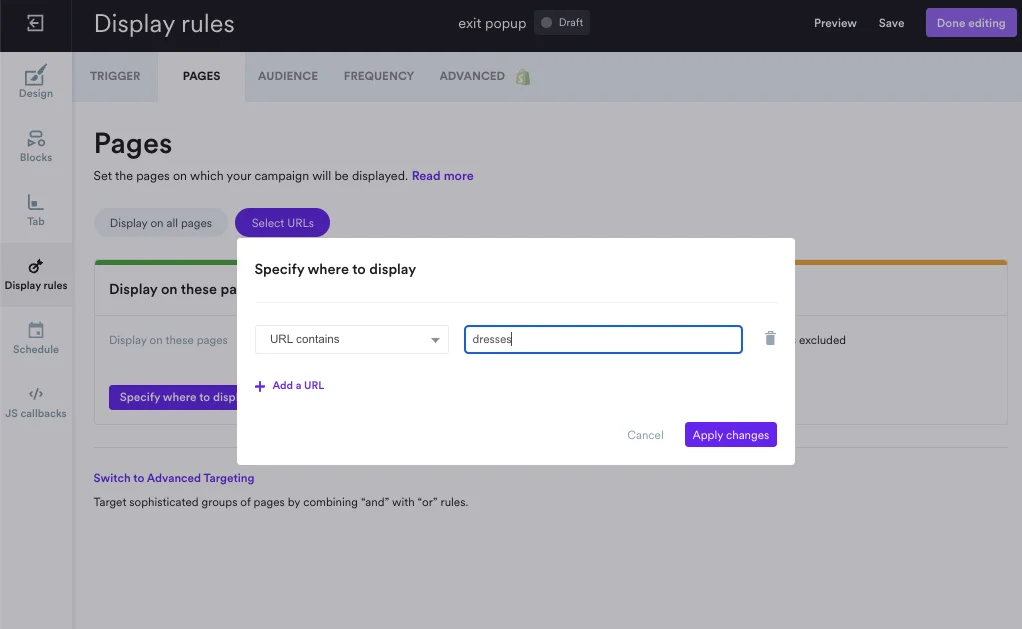
Just like that, you can make a contextual ecommerce popup campaign that’s relevant to the visitor experience.
By naming the campaign in a specific way and connecting Wisepops to your email marketing app, say, Klaviyo, you can create a special segment of leads interested in a specific product category. Doing so allows you to create more personalized email campaigns for further lead nurturing.
5. Try a product giveaway
Here’s why a product giveaway is a good apparel marketing idea:

For apparel brands, giveaways are a great way to attract new customers, and reward the loyal ones. It creates goodwill and strengthens customer relationships, and can be a great way to introduce your products to new customers.
Take inspiration from this example:
Faguo gave away a pair of their best-selling sneakers. To maximize participation, they used a spin-to-win popup on their website:

This apparel marketing idea was so successful that Faguo now runs product giveaways on a monthly basis.
Here’s how many emails they generated (see the Emails column) in a few months:

The key to a successful giveaway for a clothing brand is a relevant prize, simple rules for entering, and a prominent position on the website.
A prize could be:
An expensive clothing item
A pair of shoes
An accessory
A gift card
Store credit
If you’re interested in trying this apparel marketing idea, here are 10 giveaway ideas with examples to help you get started the right way.
6. Drive traffic to pages with sales or special offers
This apparel marketing idea is simple:
Add onsite campaigns to the homepage to make visitors discover more of your products, collections, and marketing messages.
Let’s see a couple of examples.
Dolce & Gabbana places such small and gorgeous popups in the right bottom corner to let visitors know about new arrivals (in this case, it was the Kim Dolce & Gabbana T-Shirt):

Next up—
Net-a-porter, another popular luxury fashion brand. Their store often drives traffic to pages with sales with campaigns like this one:
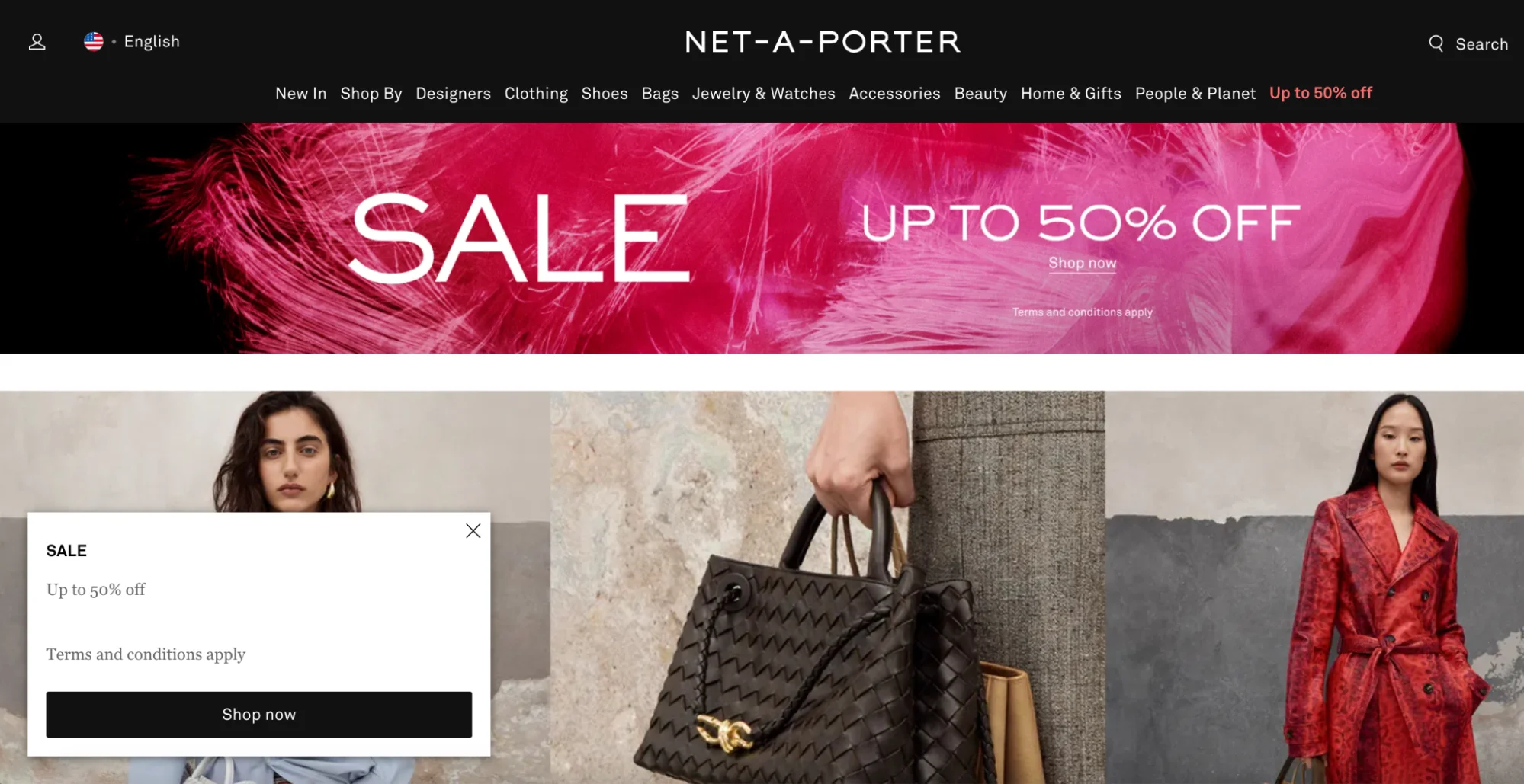
Indeed, that’s a good apparel marketing strategy if you’d like to increase engagement with new arrivals or special sales.
And it’s also something you can replicate on your apparel store easily.
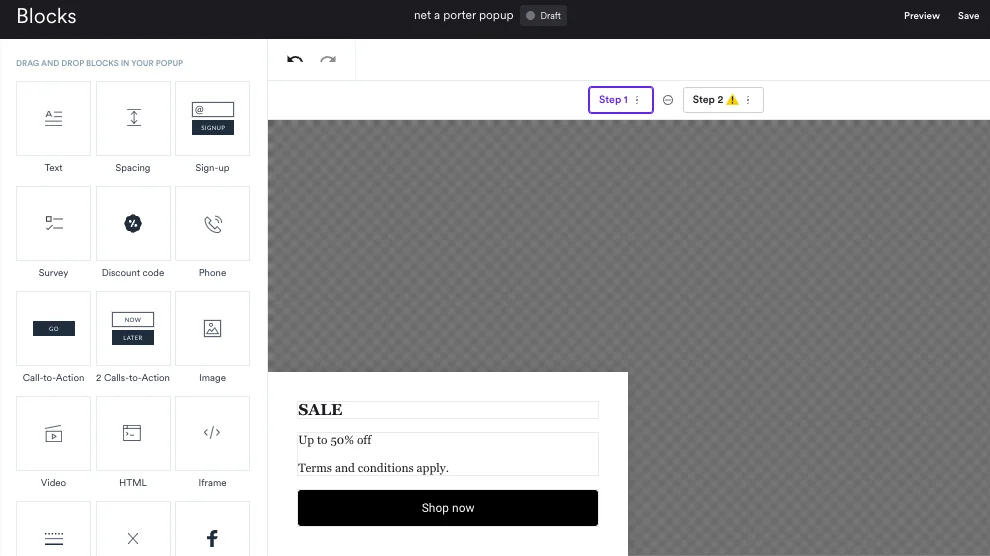
For example, I was able to create an exact copy of Net-a-porter’s popup in about two minutes:
7. Use B2GO (buy 2, get one for free)
B2GO offers are a savvy way to move inventory quicker and increase ecommerce sales.
By encouraging customers to buy more to get a free item, you're increasing the perceived value of their purchase and encouraging them to spend more. So, it could be a good apparel and accessories marketing idea (to add a free accessory to clothing, for example).
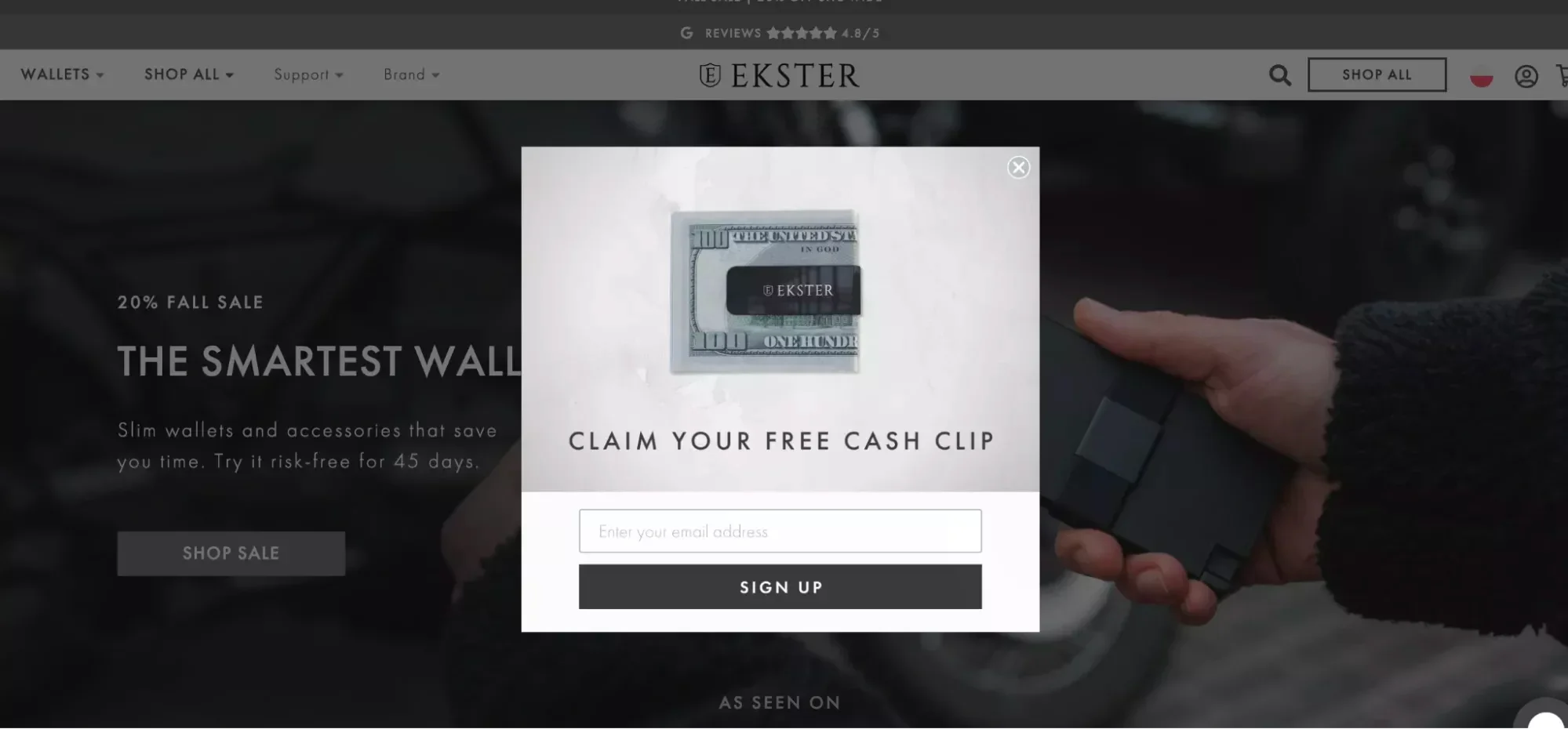
Ekster, for example, rewards customers with a free cash clip for buying two items. To maximize the awareness of this special offer, the brand uses this message:
Related:
Sales promotions examples (learn how to write engaging texts for promotional offers on your website)
How to sell with time-limited offers (+examples and expert tips)
8. Add similar product and styles to product pages
Help your customers find the right color and shade easier with recommendations on product pages. Fashionnova knows what their customers might want to buy, so they show similar styles and related products like that:
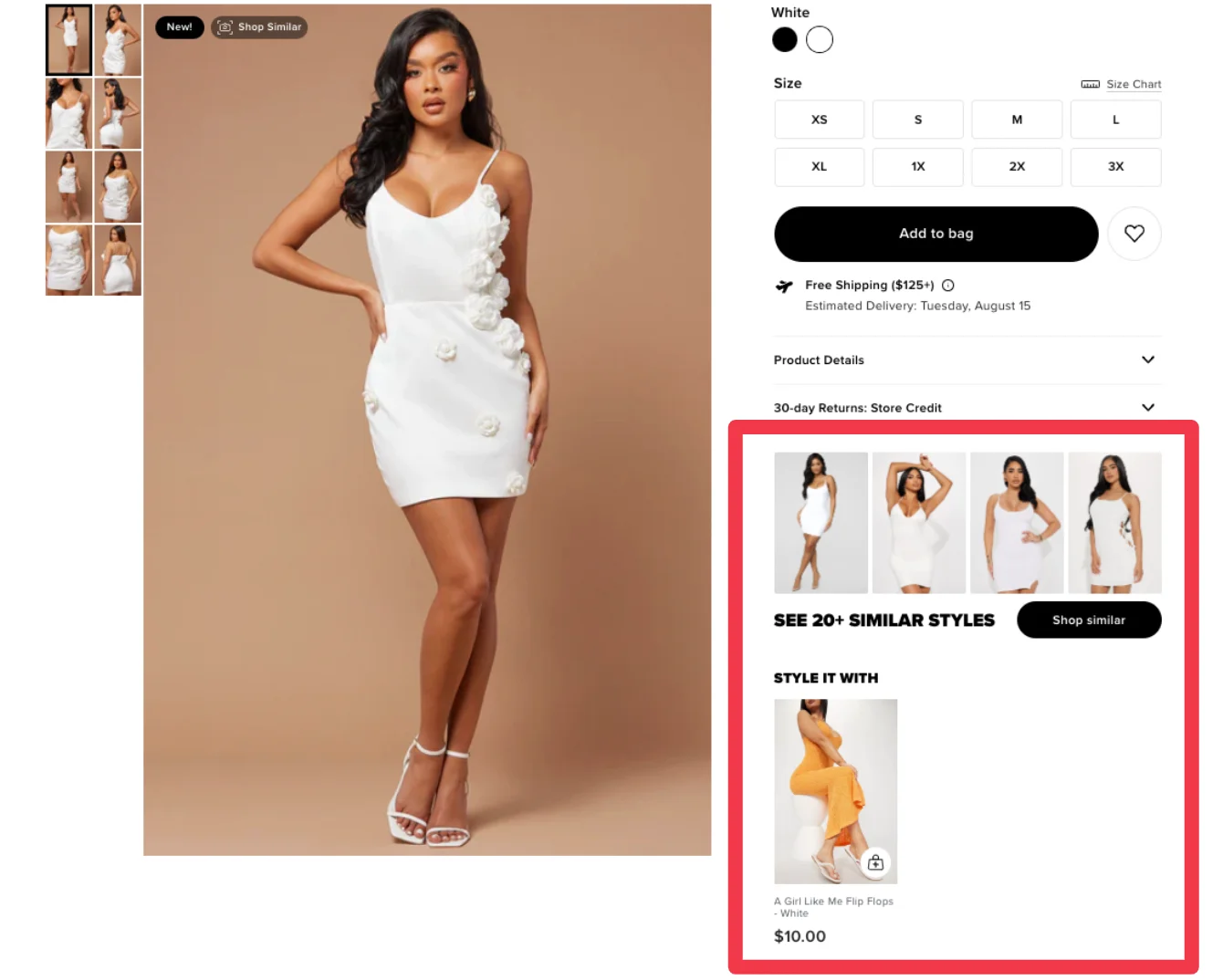
You can use customer browsing data to provide relevant suggestions like these. It will transform the shopping experience, and increase average order value and overall sales.
The more tags you give products and the deeper you dive into your data, the easier it will be to recommend your customers products that they simply can't say no to.
The best tools for tracking customer activity on ecommerce websites are Google Analytics and Hotjar.
9. Promote your values and mission
People are no longer just buying products. They are increasingly choosing environmentally-friendly and ethical brands because they know that the fashion industry is one of the biggest contributors to climate change.
That means that fashion brands need to:
Share their manufacturing practices and policies
Get involved with environmental organizations or volunteering
Run marketing campaigns in an ethical way
Let’s see some examples.
Allbirds shares their entire sustainability strategy on a special page:
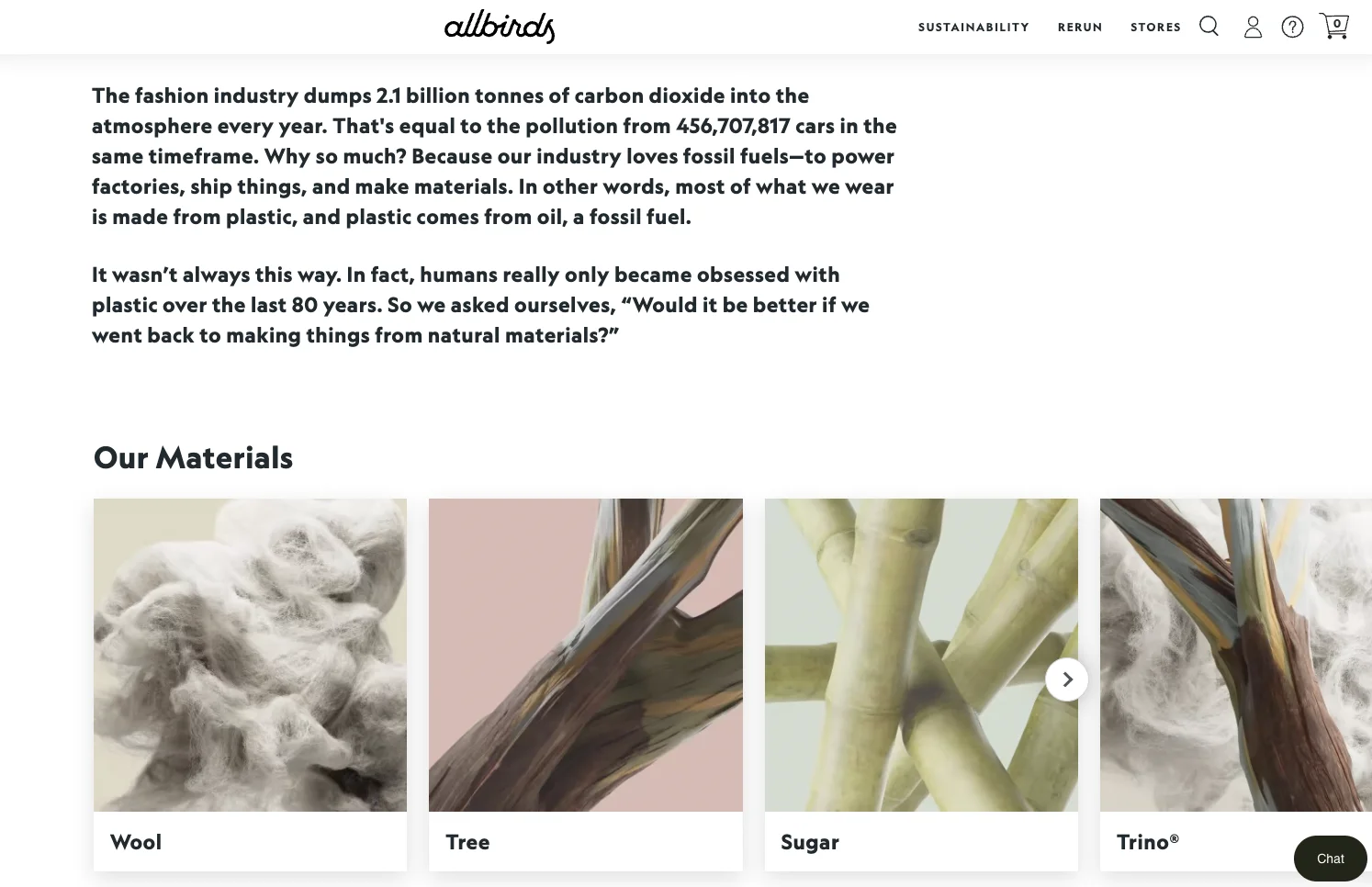
Gymshark, another successful Shopify fitness apparel store, also shares a ton of resources about sustainability and community projects:

Visit those pages—and maybe your competitors', too—to get some inspiration (this could be especially useful if you're just starting a clothing brand). Today, sustainability is a must for a successful business in the apparel industry, so you’ll find plenty of examples to get you started.
If you’d like some help with sustainability reporting, this guide from Harvard Business Review will definitely help.
Related:
Examples of ethical marketing (includes Patagonia, TOMS, and Allbirds)
10. Grab emails before visitors leave
Not every visitor is going to buy, we know that. We need to convert them, manage the emails, and get sales.
That’s why having a email capture campaign collecting emails (email popups) is a good idea. If you’re not a fan of popups, that’s all right—there are many ways in which you can implement them in a tasteful way that doesn’t affect the browsing experience in a major way.
Let’s see how fashion stores do this:

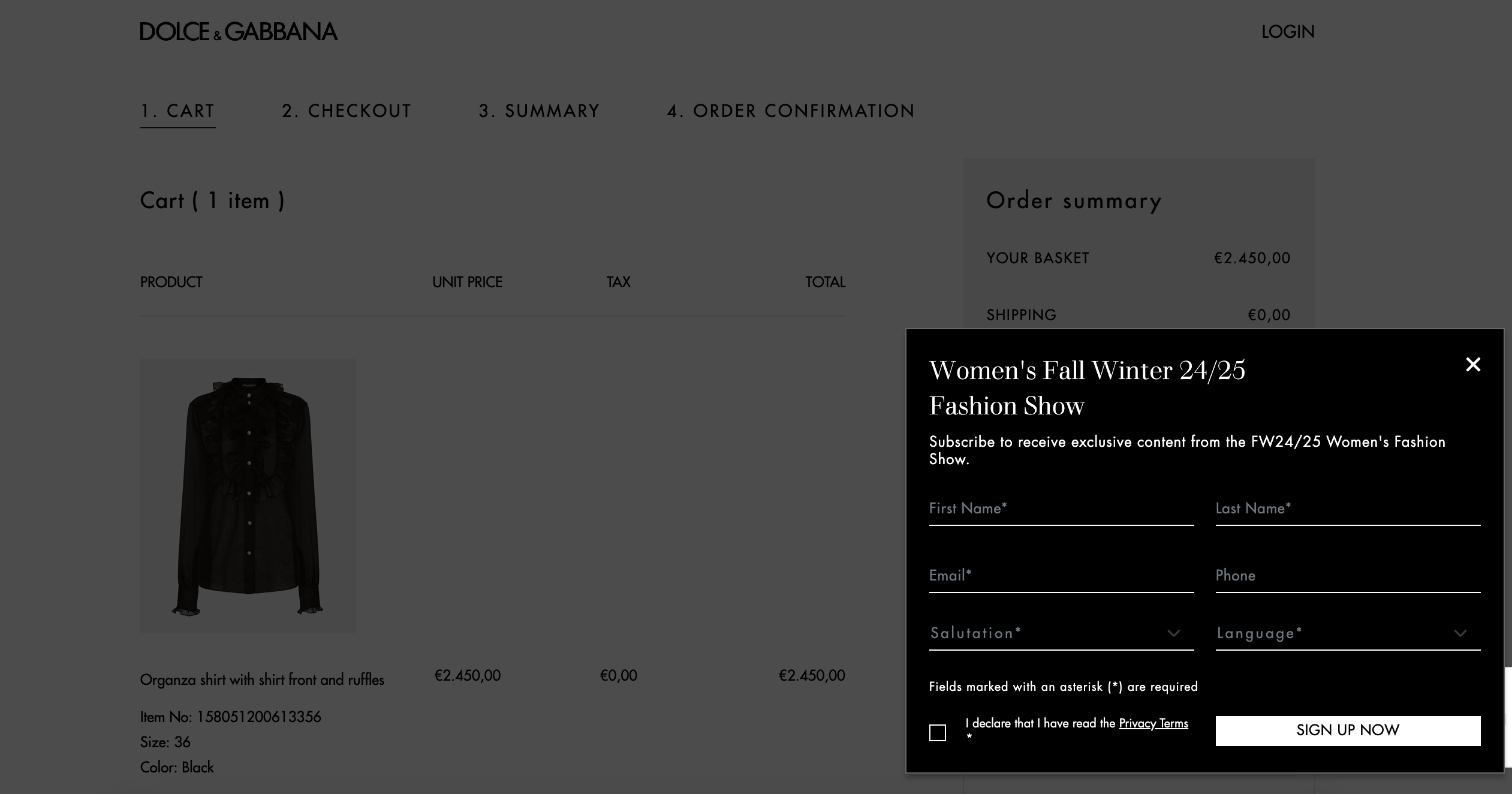

All these fashion stores would not be using website popups if they were not bringing them leads, agree?
In fact, as a company specializing in popups, we know that email popups like the ones you’ve just seen convert up to 8% of visitors on average.
The keys to a high-converting popup for an apparel store are:
Design. Full-screen popups increase email and phone capture by an average of 48%, with click-through rates jumping 52% on average. Match your popup format to your goal: full-screen for email list-building, slide-ins for mid-funnel engagement
Value. Quantified value copy outperformed emotional messaging in 68% of tests, with revenue lifts of 8–15%. Focus on tangible benefits like "Free Shipping," "10% OFF," or "Exclusive Preview"—clear discounts and numeric codes drive 7–20% more engagement than urgency-heavy or empathic copy
Display Timing. Delayed popups (20–50 seconds) reduce bounce rates up to 45% and boost email capture 20–43%, while immediate popups under 5 seconds increase bounce up to 5x.
Simplified Forms. Micro-commitment steps (like Yes/No screens) drive up to 8–9x more interactions and double signups without increasing bounce. Keep your initial signup simple andask for only essential information first to reduce perceived commitment
Instant Rewards. Reveal discounts and offers directly in the popup instead of sending them via follow-up email. This approach generates more code applications and recovers an additional 8–14% of abandoning mobile shoppers
Apparel marketing: the bottom line
Hope you got some practical tips to promote your fashion products online.
Feel free to try different strategies and see how they perform!
Get started
in minutes
Start converting more visitors today.
Get started in minutes and see results right after.